
ALTA Survey vs Boundary Survey: Which One Your Commercial Deal Needs
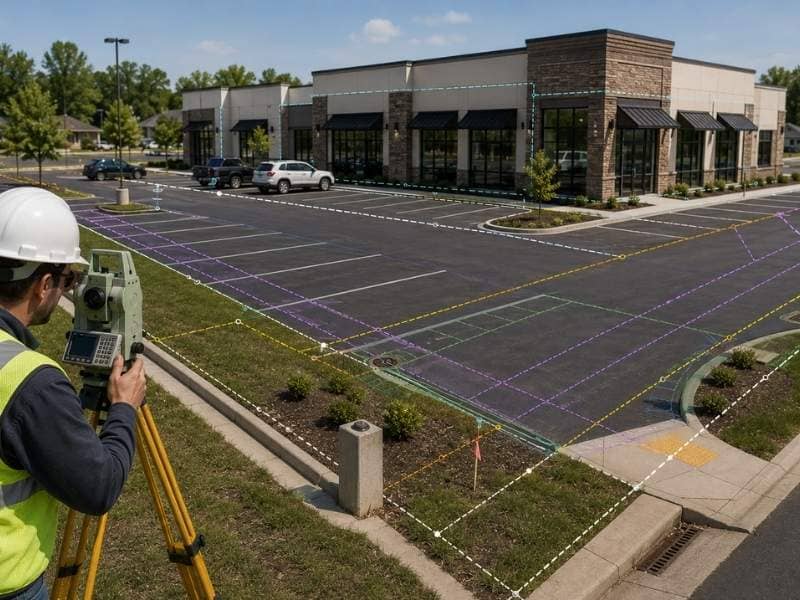
An ALTA survey and a boundary survey sound alike, but they do different jobs. For a commercial deal, picking the right one can save you real money and trouble. A boundary survey shows where your property lines fall. An ALTA survey does that and considerably more, built to a national standard that lenders and title companies trust. Knowing the gap between the two helps you order what your deal needs.
What Each Survey Proves
A boundary survey answers one main question, where the property lines sit. The surveyor locates the corners, measures the edges, and maps the overall shape of the parcel. For many straightforward needs, such as a fence line or a small lot question, that level of detail is enough.
An ALTA survey covers the property lines as well, but it also follows a national standard established by surveyors and title organizations. That shared standard means a buyer, a lender, and a title company all read it the same way. The result is a far more complete picture, built specifically for larger and higher-stakes deals.
Where a Boundary Survey Stops
A boundary survey performs its job well, but it is not the right tool for a commercial purchase. It usually does not map every building, drive, or utility line on the site. It also may skip easements and rights that do not show up on the ground. For a small project that gap rarely matters.
On a commercial deal, those missing details can become genuinely expensive problems. A driveway that crosses a neighbor’s land, or an easement that runs beneath a planned building, can stall an entire sale. A boundary survey alone may never flag those risks. That is the gap an ALTA survey closes.
What an ALTA Survey Adds for a Commercial Deal
An ALTA survey goes well past the property lines. It maps the actual features on the site and compares each one against the recorded documents. That additional layer of verification is why buyers and lenders treat it as the standard.
- Buildings, drives, and parking areas mapped in their true spots
- Easements and rights of way that records may hide
- Spots where a building or fence crosses a line
- Access points and whether they are legally yours to use
- Optional items a buyer can add to fit the deal
With these details documented, a buyer can evaluate the entire site before closing. Problems show up while there is still time to fix them or adjust the price. That is why an ALTA survey carries so much weight in a commercial sale.
When a Lender Requires the ALTA
Lenders rarely fund a commercial purchase on a boundary survey alone. Most require an ALTA survey before they will release the financing. They want proof that the site matches the records and carries no hidden conflicts that could threaten the loan. The survey protects their loan and the buyer too.
Title companies lean on the same document. A clean ALTA survey lets them drop standard survey exceptions from the title policy. That gives the buyer stronger coverage on the deal. For a commercial closing, that protection is hard to skip.
How to Pick the Right Survey
Start with the size and stakes of the deal. For a home lot, a fence, or a simple boundary question, a boundary survey usually does the job. The cost is lower and the work is faster.
For a commercial purchase, a loan, or a tricky site, the ALTA survey is the safer choice. It answers the questions a lender and a title company will ask anyway. Paying for the right survey up front beats paying for surprises after you sign.
Frequently Asked Questions
What does an ALTA survey include?
An ALTA survey maps the property lines, buildings, drives, and parking on a site. It also shows easements, access rights, and any spots where a structure crosses a line. All of this follows a national standard, which allows lenders and title companies to interpret the survey the same way.
Who pays for an ALTA survey?
The buyer usually pays for an ALTA survey during the buying process. In some deals, the buyer and seller split the cost or negotiate which party ultimately covers it. The price depends on the site size, the detail required, and any optional items added.
Can an ALTA survey find encroachments?
Yes, finding encroachments is a main reason buyers order an ALTA survey. It shows where a fence, building, or drive crosses a property line. Catching that before closing gives the buyer room to act.
Is an ALTA survey needed for refinancing?
Some lenders ask for an ALTA survey when an owner refinances a loan. They want current proof of the boundaries and any conflicts on the site. Whether one is required depends on the lender and the loan.
How long is an ALTA survey valid?
An ALTA survey carries no fixed expiration date, but lenders and title companies often want a recent one because site conditions change over time. A survey from many years ago may need an update before a new deal.
When should an ALTA survey be ordered?
Order an ALTA survey early in the buying process, rather than waiting until right before closing. Early results leave time to review any issues and work them out. Waiting too long can shrink your options and delay the deal.