
Boundary Survey Clues That Reveal Old Fence and Garage Encroachments
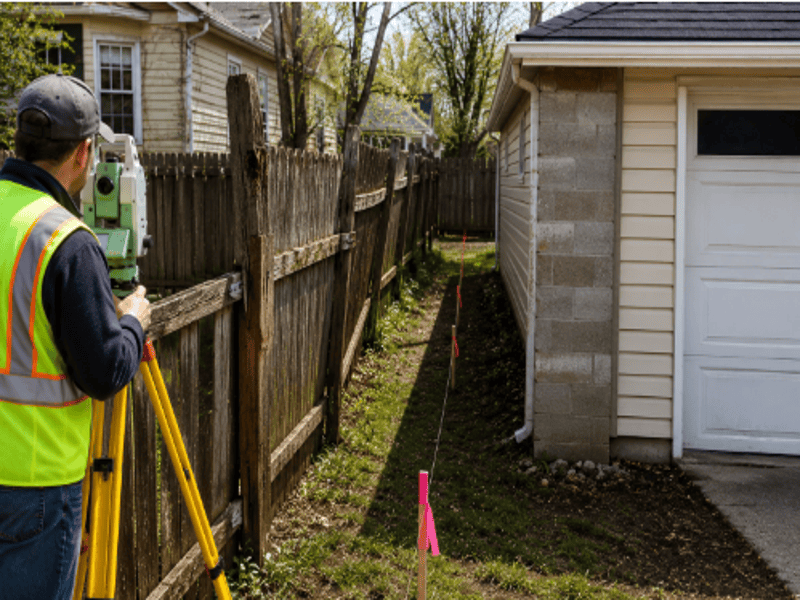
A boundary survey locates the true legal property line using recorded deeds, plat maps, and physical evidence found on the ground. When surveyors measure a property, they often find that old fences and garages do not line up with where the legal line actually falls. These problems are called encroachments, and they happen more often than most homeowners expect. Structures built decades ago may have gone up without a survey, based on nothing more than a rough guess about where one yard ended and another began.
The trouble is that years of quiet use do not make an encroachment go away.
How a Boundary Survey Shows If a Fence or Garage Crosses a Property Line
A boundary survey compares the legal property description in the deed to what exists on the ground today. The surveyor sets or locates property corner markers, measures the distances and angles described in the legal record, and plots where the true line falls. Any structure that sits across that line, even partly, shows up as an encroachment on the survey drawing.
Fences are one of the most common things found in the wrong place. A garage or outbuilding corner crossing a property line by a foot or two is also more common than people think, especially in older neighborhoods where structures were built without permits or surveys. The survey drawing shows exactly how far the structure crosses and onto whose property it extends.
Clues Surveyors Use to Find Older Fence and Garage Problems
Surveyors do not just measure from a starting point and call it done. They read the property like a record of everything that has happened on it. Older fence posts made of wood or pipe, set at angles that do not match the modern fence line, often signal that an earlier fence existed in a different location. Patches in the ground where concrete was poured and later removed point to structures that were moved or rebuilt at some point.
Building materials also tell a story. A garage with one wall built from older block or brick while the rest uses newer materials may have been extended at some point, possibly past the line. When surveyors spot these kinds of details, they dig into the deed history and prior plat records to understand what the line looked like when the structure was first built. That comparison is often where the encroachment becomes clear.
Why Homeowners Often Discover Encroachments During Neighbor Disputes
Most encroachments sit unnoticed for years. Nobody measures anything, and both neighbors carry on with their own idea of where the line falls. The issue usually comes to the surface when one side decides to repair a shared fence, add onto a garage, or make changes near the shared boundary. At that point, someone starts asking questions, and the answers do not match up.
Homeowner forums online are full of posts about exactly this situation. One neighbor wants to replace an old wooden fence and assumes the new one goes in the same spot. The other neighbor disagrees about where that spot should be. Or a garage repair project leads to a conversation about who actually owns the strip of land the structure sits on. These situations are rarely resolved with a conversation alone. A survey gives both sides a document based on recorded legal information rather than memory or assumption.
Steps to Take When a Boundary Survey Finds an Encroachment
Finding out that a fence or garage crosses the property line is not the end of the road. The first step is to get the survey drawing in hand and understand exactly what it shows, including how far the structure crosses the line and in which direction. That detail matters when talking with a neighbor or an attorney.
Keeping a paper trail from the start makes the process easier. Save the survey drawing, the deed, and any written communication about the issue. When the time comes to talk with a neighbor, having those documents ready removes the need to rely on memory. Many encroachments get resolved through a written boundary agreement between both property owners without going to court. Others require the structure to be moved. Either way, the survey gives both parties a shared factual record to work from rather than competing versions of where the line should be.
How a Boundary Survey Can Help Avoid Future Property Line Issues
Ordering a boundary survey before starting construction is one of the most practical ways to avoid an encroachment problem. A survey done before a fence goes in, a garage gets built, or an addition gets permitted confirms where the line sits before any money gets spent on materials or labor. Building even a few inches past the line without knowing it can create a legal problem that costs far more to fix than the survey would have.
Updated survey records also matter when a property changes hands. A buyer who receives a current survey at closing knows exactly what they are getting. If a prior owner built something close to the line, a fresh survey shows whether it crosses or not. That information protects the new owner from inheriting an encroachment dispute they did not know existed.
Frequently Asked Questions
Can a boundary survey tell if an old fence is on the wrong side of the property line?
Yes. A boundary survey locates the true legal property line using deed records and physical corner markers. Once the surveyor plots the legal line on a drawing, any fence that sits off that line shows up clearly, along with how far it deviates and in which direction.
Can a boundary survey find garage encroachments?
Yes. A boundary survey measures all structures on a property and plots them against the legal line. If a garage wall or corner crosses onto a neighboring parcel, the survey drawing shows the exact distance and location of that crossing.
Why are old encroachments sometimes found years later?
Old encroachments often go unnoticed because neither neighbor measures anything. They stay hidden until a home sale, a permit application, or a project near the shared boundary prompts someone to order a survey. That survey is usually the first time anyone has compared the structure’s location to the actual legal line.
Is it safe to replace a fence in the same spot as an old one?
Not without a survey first. An old fence line reflects where a prior owner decided to put a fence, not where the legal property line falls. Replacing it in the same location without verifying the line first can put the new fence in the wrong place, which creates the same encroachment problem all over again.
When should a homeowner get a boundary survey?
Before building a fence, adding a garage or outbuilding, starting a renovation close to the property edge, or buying a property where structures sit near the boundary line. Those are the situations where an undetected encroachment is most likely to become a problem.