
LiDAR Mapping for Low Lots Where Drainage Problems Stay Hidden
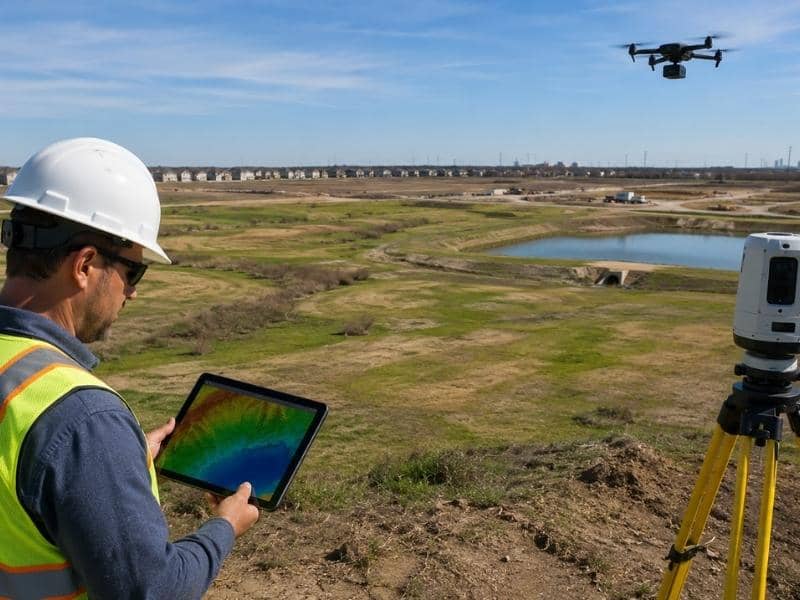
Drainage problems on low-lying properties don’t always show up right away. During dry weather, a lot can look perfectly fine. Then the rain comes, water pools in places nobody expected, and the development timeline has a big problem. LiDAR mapping gives property owners, engineers, and developers a way to spot those risks before they turn into costly surprises.
LiDAR stands for Light Detection and Ranging. It sends out laser pulses that bounce off the ground and come back to a sensor. The result is a detailed, three-dimensional picture of the land that shows small changes in height down to a few centimeters. On a low lot where a six-inch drop can send water in a completely different direction, that kind of detail matters a lot.
How LiDAR Mapping Finds Elevation Changes the Eye Can’t See
LiDAR mapping uses laser pulses to measure how high or low the ground is, down to just a few centimeters. On flat or low-lying land, it finds small dips, ridges, and drainage paths that a normal site visit or basic survey would miss. This gives engineers and developers accurate ground data before any work starts.
Walking a property and looking at the ground tells you very little on flat land. The human eye can’t pick up changes smaller than a foot or two. Many drainage problems are much smaller than that.
LiDAR catches those small differences. A slight dip in the middle of a lot, a small ridge near a property line, a gentle slope toward a neighbor’s land, all of these show up clearly in the data. Engineers can look at the terrain model and see exactly how water would move across the site during a rainstorm. Decisions that used to be based on guesses are now based on real measurements.
Finding Water Collection Areas Before They Cause Damage
LiDAR terrain models show dips, low spots, and water flow paths on a property before any building starts. Finding these areas early lets developers change grading plans, add drainage pipes, or move structures. This prevents costly fixes after concrete has already been poured.
Low spots on a property are where drainage problems start. Water moves to the lowest point it can find. On a flat lot with nowhere for water to go, it often ends up sitting in a dip and causing trouble.
LiDAR data makes those dips easy to see before construction begins. A terrain model built from LiDAR data shows every low pocket on the site. This includes ones hidden under grass or covered by a thin layer of soil. Developers who look at this data early can change their grading plans, add drainage pipes, or move where buildings go. Finding out about these problems after concrete is poured costs far more to fix.
Why Low Lots Need More Than Basic Surveys
Basic topographic surveys use measurement intervals that are too wide to show the small grade changes that control drainage on flat land. On low lots where the total height difference across the whole property is only two or three feet, a standard survey can miss important drainage lines completely.
Basic topographic surveys work fine on land with big hills and clear slopes. On flat land, they often miss important details. The measurement gaps used in standard surveys are too wide to show the small changes that control where water goes on a flat lot.
A common survey uses two-foot measurement gaps. On a lot where the total height change across the whole property is only three feet, that gap can miss a drainage line completely. Missing that line can mean the difference between a lot that drains well and one that floods every time it rains.
LiDAR data is much more detailed. Aerial LiDAR surveys often collect several data points per square meter of ground. Ground-based scanning collects even more. The terrain models that come from this data show engineers exactly how the land works, not just a rough guess.
Using LiDAR Data to Plan Better Drainage
LiDAR terrain models feed into engineering software that simulates storms, predicts where water will pool, and tests drainage designs before building starts. This helps engineers size detention areas correctly and place drains where they will actually work, cutting down on expensive field changes later.
Good drainage design needs good ground data. When engineers can see the true shape of a site in three dimensions, they can plan stormwater flow correctly, size water storage areas, and place drains where they will actually work.
LiDAR terrain models feed directly into engineering software. Engineers use these models to simulate rain events, find where water will pool, and test drainage designs before any building starts. Problems that would cost tens of thousands of dollars to fix on a job site can be solved in the computer model for much less.
On low lots where there is little room for error, a drainage plan based on accurate ground data is the only one that will hold up during review.
How LiDAR Terrain Data Helps During Development Review
Development review agencies need accurate, verifiable site data to check drainage plans and grading designs. LiDAR terrain analysis provides a detailed record of what the land looked like before construction. Reviewers can compare that record directly against the proposed plans, which cuts down on revision requests and keeps projects moving.
Review agencies need accurate site data. When reviewers look at a drainage plan or grading design, they want to see numbers that reflect what the land actually looks like, not estimates based on a rough map.
LiDAR terrain data gives reviewers exactly that. It provides a clear, detailed record of what the land looked like before any work started. Reviewers can compare that record directly against the plans that were submitted. When a drainage plan is backed by LiDAR data, the review process goes more smoothly.
For low-lying sites where drainage is already a concern, submitting plans without this kind of data is a risk. Review agencies often send back drainage plans that don’t have enough supporting information. That can add weeks to a project.
Frequently Asked Questions
What is LiDAR mapping?
LiDAR mapping uses laser pulses to create accurate three-dimensional models of the ground. It captures height data at a level of detail that standard surveys often can’t match.
Why is LiDAR mapping useful for low lots?
Low lots have small changes in height that control where water goes. LiDAR captures those changes accurately, showing drainage patterns that a basic site visit would miss.
Can LiDAR mapping find drainage problems?
Yes. LiDAR data shows low areas, water flow paths, and drainage lines that lead to standing water and flooding during rain events.
Who uses LiDAR mapping?
Surveyors, engineers, developers, cities, and property owners use LiDAR for drainage analysis, site planning, and land development projects of all sizes.
Is LiDAR mapping useful for both homes and businesses?
Yes. LiDAR works on any type or size of property and is especially helpful where drainage and elevation affect development plans.
Can LiDAR data help with permits?
Yes. Accurate ground data gives review agencies a clear picture of site conditions. This helps drainage plans get approved and reduces the chance of changes mid-review.